
May 19, 2026
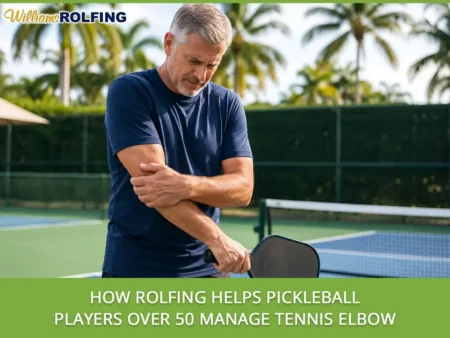
Why Tennis Elbow Is Common in Pickleball Players Over 50
Pickleball continues to grow rapidly among active adults in Tampa, FL, especially among players over 50 who enjoy the sport’s social and physical benefits. While pickleball offers lower-impact movement compared to some activities, repetitive paddle use still places stress on the wrist, forearm, elbow, and shoulder. Many players eventually develop pain commonly known as tennis elbow.
Rolfing sessions focused on movement patterns and connective tissue balance may help address the physical strain associated with repetitive pickleball activity. At Williams Rolfing, we often work with clients experiencing tennis elbow symptoms stemming from overuse, changes in posture, limited shoulder mobility, and muscular compensation patterns developed over time.
For many, maintaining mobility and reducing pain matter just as much as remaining competitive on the court.
Understanding Tennis Elbow Beyond the Elbow Joint
The problem of tennis elbow is often misunderstood as an isolated issue of the elbow. In reality, pain near the outer elbow is often caused by stress patterns involving the wrist, shoulder, upper back, and overall body mechanics.
Pickleball players over 50 may have reduced flexibility, muscular imbalance, or joint restrictions that slowly increase the stress on the tendons in the forearm. Constant backhand shots, improper grip pressure, and limited shoulder rotation can transfer the extra workload right onto the elbow zone.
Rolfing views the body as a complete, integrated system, not just a collection of separate pain sites. Improved shoulder mobility, posture, and arm mechanics can often help reduce stress that can lead to tennis elbow discomfort.
How Rolfing Addresses Movement Restrictions
Rolfing is a hands-on soft tissue manipulation modality that aims to improve structural balance throughout the body by incorporating movement education. The goal is not just temporary symptom relief. Rather, the sessions are more likely to address identifying patterns that may be creating repetitive tension and restricted movement.
Many pickleball players develop compensatory habits without realizing it. Limited rotation of the torso, tight chest muscles, forward head posture, and hip mobility may affect the path of force through the arm in play. These patterns can cause more stress on connective tissue around the elbow over time.
At Williams Rolfing, sessions can include work on the forearms, shoulders, ribcage, neck, upper back, and hips, depending on each client’s movement habits. Moving more efficiently may reduce strain on irritated tissue.
The Role of Posture in Pickleball Injuries
As we get older, it’s not uncommon to find ourselves changing our posture more often, especially if we’re adults who sit for long periods of time, like when we’re driving or sitting at a desk. Rounded shoulders and restricted upper-back mobility can affect how pickleball players swing and stabilize their paddles.
We often see clients with tennis elbow, and they respond better when we treat more general structural patterns rather than the elbow itself. Better alignment could help spread the force more evenly during repetitive motion.
Pickleball requires quick reflexes, controlled arm movement, and lots of direction changes. When poor posture prevents efficient movement, smaller muscles and tendons often bear excessive stress. Rolfing sessions can help clients become more aware of how posture affects movement in sports and in daily life.
Recovery and Mobility for Active Adults Over 50
With age, recovery tends to take longer, especially if repetitive strain continues without sufficient mobility work or body maintenance. Many pickleball players will keep playing while uncomfortable until the pain interferes with sleep, grip, or the ability to do their normal daily activities.
Rolfing sessions can enhance body awareness, flexibility, and movement coordination and help with recovery from repetitive strain. Some clients report feeling less restricted in their movement after working on fascial tightness and compensation patterns throughout the upper body.
We want active adults to see mobility work as part of athletic maintenance, not just something to do while recovering from an injury. Consistent attention to movement quality may help support longer participation in sports such as pickleball.
Combining Rolfing With Healthy Playing Habits
Tennis elbow treatment often involves a combination of approaches. Canoe paddle grip size, swing mechanics, warm-up, recovery time, and movement efficiency all contribute to stress on the elbow.
We often tell pickleball players over 50 to focus on how their whole bodies move while playing and not just how strong their arms are. Efficient movement patterns can help reduce repetitive strain and increase comfort on the court.
Active adults can already use Rolfing as a supplement to their stretching routines, strength programs, physical therapy exercises, and other wellness practices.
Frequently Asked Questions
Can Rolfing help with tennis elbow caused by pickleball?
Rolfing may help address movement restrictions, fascial tension, and compensation patterns associated with tennis elbow discomfort in pickleball players.
Why do pickleball players over 50 develop tennis elbow?
Repetitive paddle movement, reduced mobility, muscular imbalances, and age-related changes in movement can increase stress on the tendons near the elbow.
Is Rolfing painful for treating tennis elbow?
Some areas may feel sensitive during sessions, though treatment is generally adjusted to each client’s comfort level and physical condition.
How many Rolfing sessions are needed for tennis elbow?
The number of sessions varies depending on movement patterns, symptom severity, activity level, and overall body mechanics.Rolfing can play a valuable role in helping active adults manage tennis elbow while improving movement quality and body awareness. At Williams Rolfing, we work with clients throughout Tampa, FL, who want to continue enjoying pickleball with greater comfort and mobility. Contact us today to schedule your session and learn how we can help you move with less strain and better balance through personalized Rolfing care.
Picture Source: AI-generated


